


As the hydrocarbon industry looks to improve its environmental footprint, the use of natural gas to operate pipeline actuators is coming under close scrutiny. The established practice whereby the gas is automatically vented to atmosphere after every cycle is seen as not just wasteful but potentially harmful, given methane’s potency as a greenhouse gas. A closed-loop, instrument air system could be a solution, says Bob Connal from Hybrid Automation.
By KCI Editorial
During the nascent years of the gas industry, harnessing the potential energy of the gas being transported in high-pressure gas pipelines was a logical option for the operation of pipeline valves. Remote valve systems – necessary for safety and operational reasons – could be opened or closed using gas-powered pneumatic actuators, hence avoiding the need to lay on expensive electrical or compressed air hook-ups in isolated locations.
However, times and insights change, prompting governments, environmental authorities, oil and gas plants and even the pipeline operators themselves to seek ways to eliminate methane emissions from pipeline actuators.
Hybrid Automation’s Bob Connal is fully cognizant of the pros and cons of numerous options. “For example, electric actuators supported by battery packs and solar panels could be installed; however, electric actuators are more susceptible to failures in high temperature, high vibration environments. Pneumatic actuators are known for being robust, so finding a way to repurpose existing devices has advantages. For example, I have seen a few closed-loop, natural gas-driven pneumatic systems. However, these technologies require complex, expensive re-injection of natural gas to a downstream pipeline or a remote recovery system. An extra complication is the requirement for quarterly system inspection for gas leaks and submittal of maintenance records for each device.”

Another alternative could be to convert the existing pneumatic actuators to run on instrument air. The devil, of course, is in the details. Connal: “a key downside in traditional instrument air pneumatic systems is the reliance on exhaust venting. This means that a constant source of instrument air is required which must be dried and cleaned before being compressed for use. If the ambient air is dry and clean before compression, exhaust venting systems can be a be cost-effective, requiring minimal maintenance. However, ambient air with a high moisture content, elevated salinity levels or high dust can pose significant challenges to exhaust venting systems. In areas prone to freezing, what are potential effects of line condensation on failsafe/ESD pneumatic actuators?”
An elegant solution presented by Connal is a ‘closed-loop’ instrument air pneumatic system. “This can be easily explained by visualizing an air-conditioner in a car. Once the closed loop system is charged and operational, it requires no additional medium to operate. Nothing goes into the closed loop air conditioning system, nothing comes out. Compressor-based instrument air for closed loop pneumatic actuator systems achieves the same goal; providing operating pressure to control the actuator. Closed loop instrument air systems are maintenance free, providing long term cost savings. No air filter replacements or drive belts issues are part of a maintenance program.”
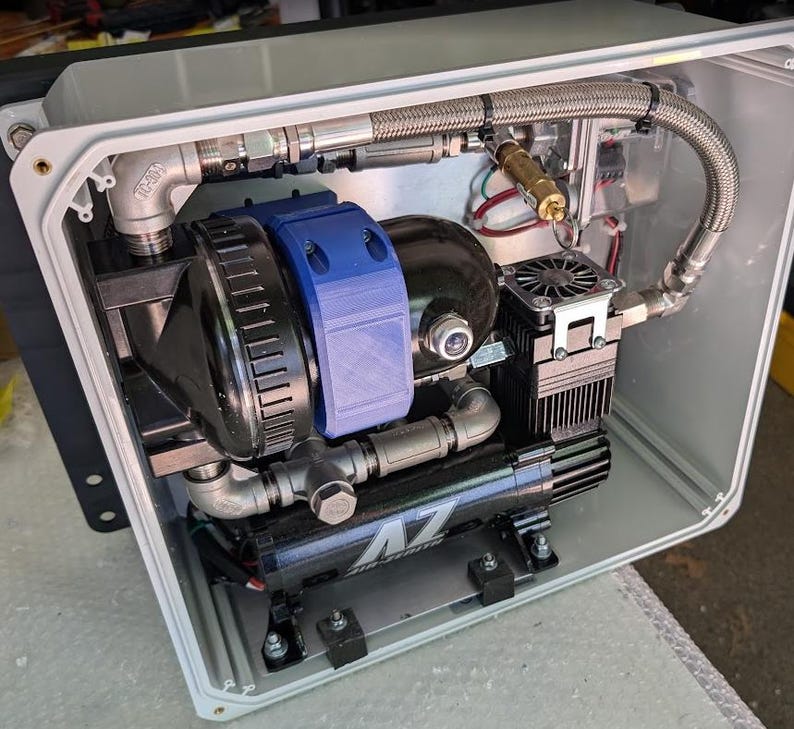
Connal states that the closed-loop instrument air concept has been proven in real-world applications since 2022. “During the installation process, we charge our system with compressed air. We have seen our systems operate reliably for many years and hundreds of thousands of cycles without the need for additional clean air.”
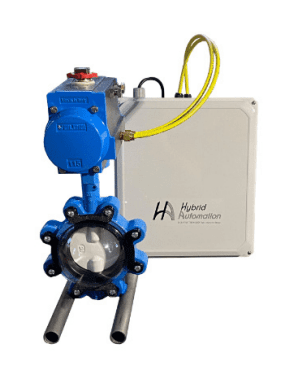
Minimal Disruption
In addition to use on remote pipeline actuators, the closed-loop system will be beneficial in many industries, says Connal, listing oil and gas companies, the chemical process sector, paper mills, shipbuilding, water treatment plants, etc. Moreover, as well as deployment on standard on/off pneumatically actuated valves, the closed-loop system can also be fitted to fail-safe valves.
To enable potential customers to take informed decisions, units are regularly provided for field testing or bench testing. “We tell companies to run our system for six months and let us know how it performs. Then we can sit down and talk through all the options.”
Connal says that the feedback is most encouraging. “Engineers and maintenance managers appreciate the fact that their existing, robust pneumatic devices remain in place whilst plant owners are persuaded by the fact that expensive new equipment is not required as well as the minimal disruption during installation.”
Looking at the bigger picture. Connal acknowledges that reducing greenhouse gas emissions will require effort from various parties, including the oil and gas sector, environmental agencies, governments, and innovative suppliers.
 Bob Connal is the Founder and Managing Director of Hybrid Automation Inc. He developed the company’s patented technology, which converts methane-powered pneumatic actuators into a closed-loop, zero-emission system. This innovation helps oil and gas producers eliminate methane emissions while complying with EPA Regulation 40 CFR 60 and Quad-O b/c requirements.
He concludes by saying that all leaks need to be considered. “Cumulative emissions from smaller actuators can quickly add up. Consider actuators on a new gas field, which may be cycled every ten seconds! On a large transport pipeline, with valves measuring 36” or even 42”, pneumatic actuators can be the size of refrigerators. You can imagine how much gas is released every time they are cycled. That’s a leak source which can be quickly and permanently remedied with a closed loop system.”